
Replacement and upgrade with Visa gensets in a strategic, highly redundant Data Center
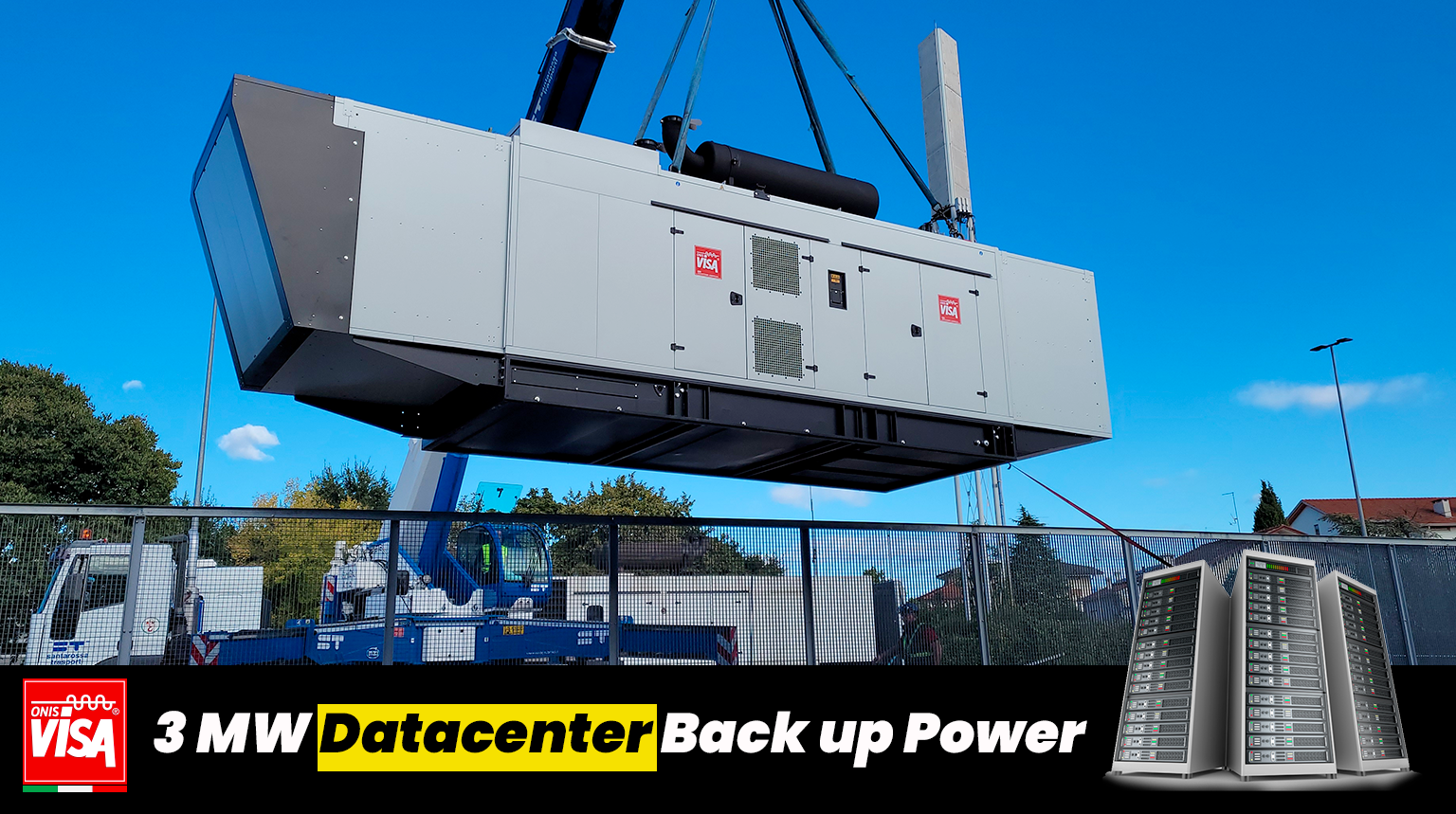
Visa SpA has recently completed a major project involving the supply of two 1500 kVA gensets for a leading global manufacturer of professional and domestic appliances.
The project focused on replacing the old generating sets of the existing installation with new, technologically advanced, low- emission units.
The generating sets were installed at the group’s central Data Center, a strategic facility on which all the company’s European sites depend—from research and design activities to production and management processes.
The role of generating sets in a data center is crucial: in situations where power continuity is essential, even a few seconds of interruption can cause operational downtime, loss of sensitive data, or disruptions to digital services. These units provide an immediate emergency power source, capable of automatically starting in the event of a blackout or grid instability, ensuring full operability of the IT and communication systems that form the technological backbone of the company.
The project involved the complete replacement of the existing machines with new gensets equipped with redundant systems and components to enable continuous operation even in the event of a failure in one of the control units.
The supply also included dual transfer switchboards with withdrawable circuit breakers and redundant grid-monitoring control units. Additionally, a supervision panel with an 18” touchscreen—powered redundantly by the genset batteries—was provided.
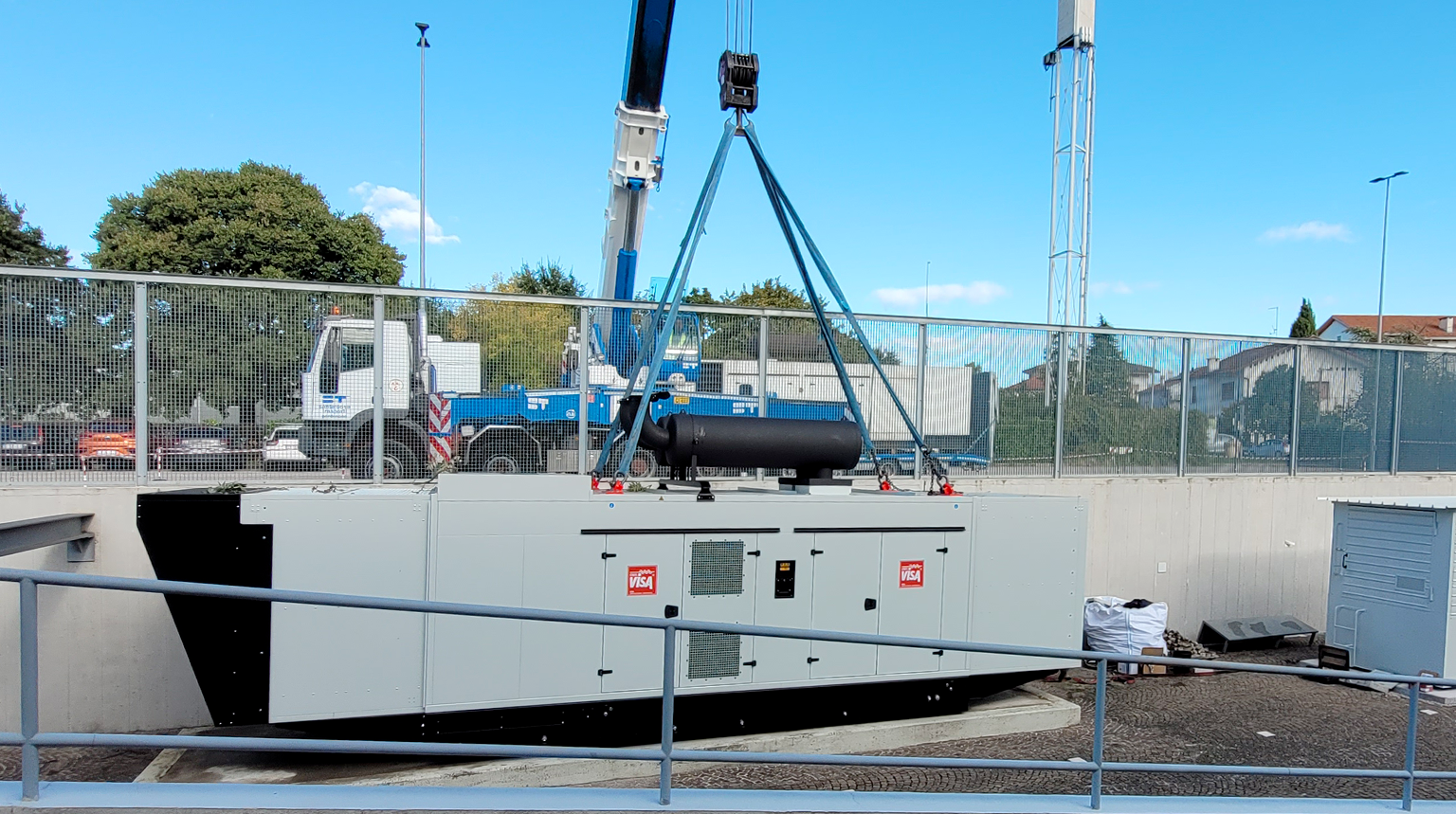
The complexity of the project was largely represented by the high level of redundancy required.
An additional challenge was the preliminary testing phase, carried out entirely at Vis’s facilities, as explicitly requested by the client. This approach prevented any power interruptions at the client’s operating site. The tests simulated all possible critical conditions, including disaster recovery situations, verifying the reliability and responsiveness of the system in every operating scenario.
After successfully completing all tests, the two generating sets and three control panels were transported and installed at the client’s site.
CASE HISTORY
| Project: | Gensets for Data Center |
| Location: | Italy |
| Installed power: | 3MW |
| Gensets supplied: | 2 units model P 1505 S in special version - P.R.P. continuous power kVA 1505 - E.P. Stand-by power kVA 1656 |
Purpose:
To ensure continuous power supply for the Data Center, keeping IT systems and digital infrastructures fully operational even in the event of blackouts or grid failures. This protects data, prevents business service interruptions, and guarantees full operability across all the group’s locations.
Technical specifications:
- Generating sets equipped with Perkins engine model 4012-46TAG2A, featuring dual starter engines, dual battery packs and dual battery chargers. Also equipped ith engine preheating systems.
- Stamford alternator model S7L1D-C.
- Dual ComAp IG1000 control panel with software unlock for hot-swap redundancy and two 5” interface displays for parallel mode.
- Soundproofed version with a 400-liter integrated base-frame tank with retention basin, dual-pump diesel filling system and an additional separate 5000-liter fuel tank.
Redundancy:
Given the type of application and the specific requirements of the site, the customer requested a high level of machine redundancy, which required a customized and complex design. Each genset was equipped with:
- Dual engine starter engines;
- Dual electrically isolated battery packs;
- Dual battery charger;
- Dual control panels, each with two displays, plus an additional board for redundant CAN-BUS communication between the two gensets (allowing continuous communication even if one cable were to fail);
- Redundant diesel refueling system with flow control, a manual selector allows switching between the two on-site fuel tanks.
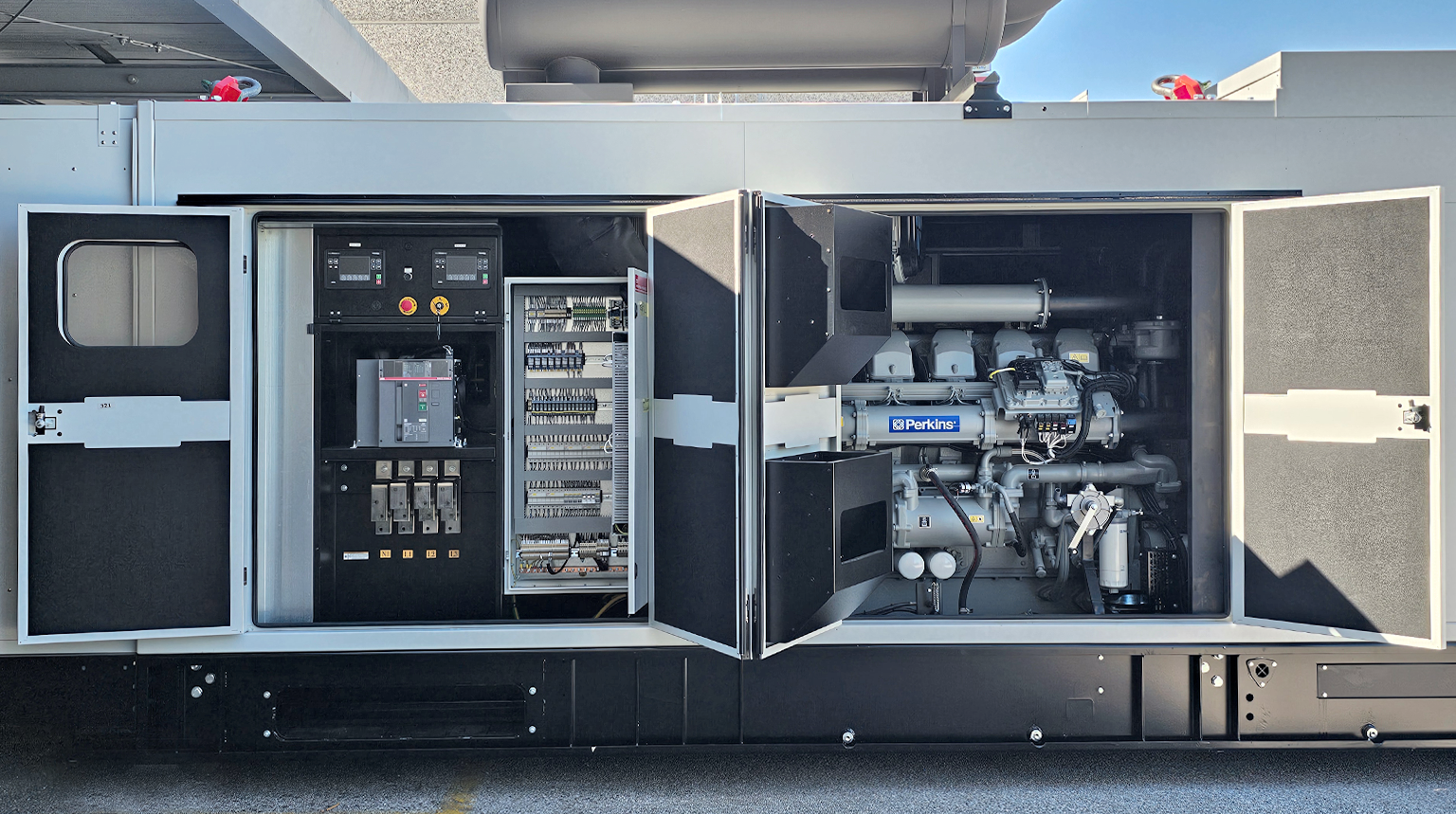
Control panel:
The gensets are equipped with a ComAp IG 1000 control panel featuring two 5” displays. The two generating sets operate in mutual redundancy. In the event of a power outage, both are programmed to start simultaneously, but only one takes the load, while the other shuts down. The operator can manually transfer the load from one machine to the other.
This system offers two advantages: rapid restoration of facility operations and an immediate indication, at the moment of grid loss, of the status of both machines.
Both units are equipped with ATS switchboards, each including two control modules for monitoring the electrical grid. These modules authorize generator startup, check for grid loss, monitor the grid breaker and interface with the onboard controllers via redundant CAN-BUS.
The entire control system is completed by a third supervision panel with an 18” display, always operational thanks to its backup power supply.
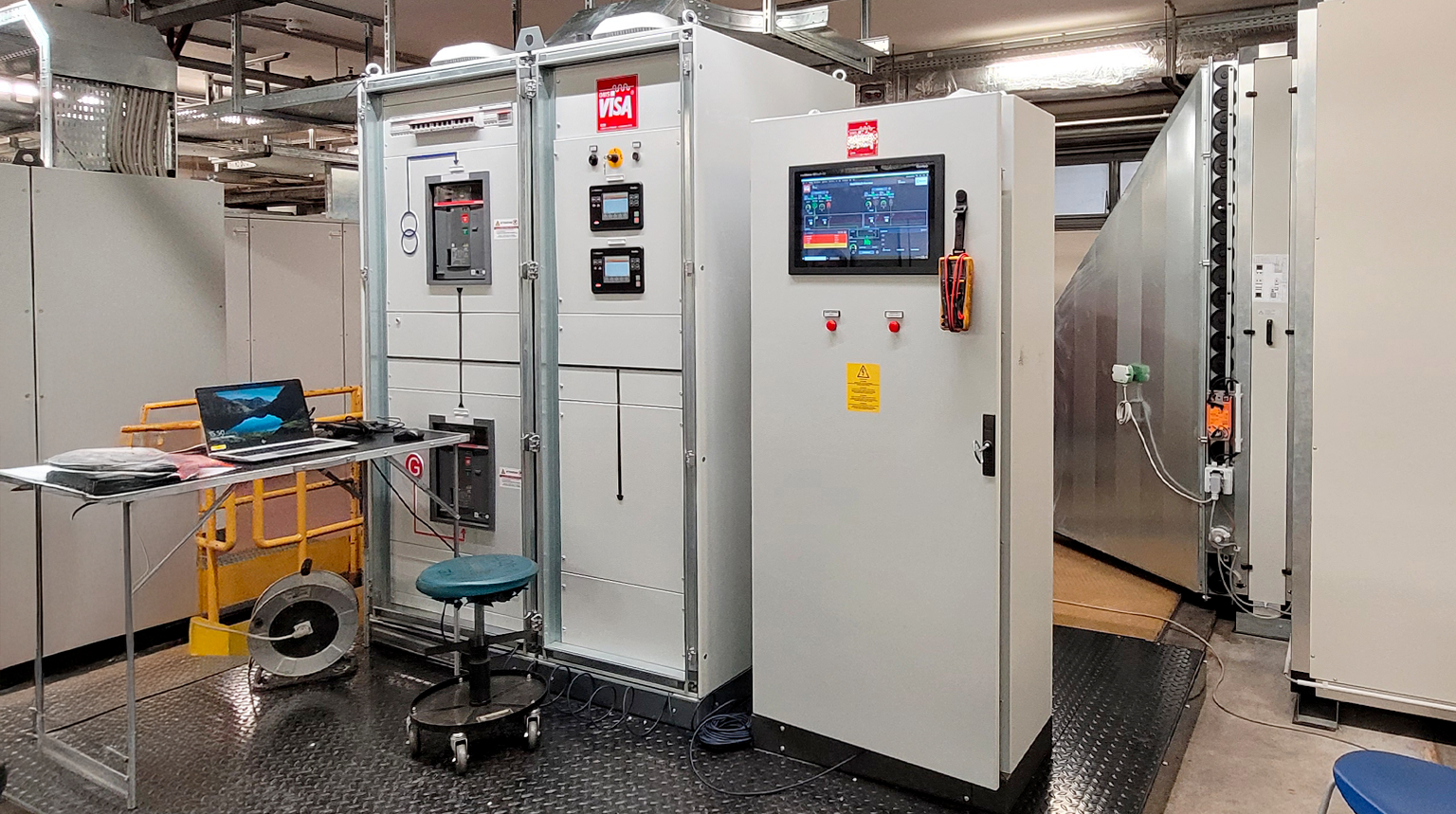
Remote monitoring system via GPRS :
The gensets are equipped with the WebSuperVisorPlus remote monitoring system via GPRS module, which allows real-time monitoring of essential parameters and alarms, early identification of anomalies, and planning of timely interventions. Remote start and stop are also possible. The system also enables viewing of trend graphs, periodic statistical reports, and notifications regarding scheduled maintenance.
Refueling system:
Each machine features a 400-liter fuel tank integrated int the baseframe with retention basin. Quick-connect couplings are provided for diesel refilling, with dual redundant pumps, flow switch and a manual selector allowing rapid switching between the two available on-site tanks (a 5000-liter above-ground tank and a 9000-liter underground tank).
Testing and commissioning:
The machines underwent rigorous customized testing according to the customer’s specifications, with the goal of simulating all operating conditions at Visa’s facility prior to shipment.
Since functional testing at the client’s site was not possible—because it could cause power interruptions and put at risk the Data Center—it was decided to perform all tests at Visa’s plant. In addition to standard protocol tests, advanced simulations were carried out to replicate real-world operating scenarios, with a focus on both grid and genset power supply systems as well as control panels.
Once all tests were successfully completed, the machines were installed at their final location. As the major verifications had already been performed, commissioning required only reduced testing, preventing any disruption to the Data Center.
To maintain continuous operations during on-site checks, an additional rental genset was used to ensure uninterrupted power to the Data Center.
The project was completed with the permanent disconnection of the old installation and activation of the new system, which now provides even more reliable and high-performance emergency power continuity.
Conclusion:
Thanks to this supply, Visa has strengthened the energy infrastructure of a critical center for data and business process management, once again confirming its leadership in emergency power solutions and its ability to support customers with reliable, customized systems designed to ensure long-term operational continuity and maximum safety